

Normally, Thursday installments of my newsletter are for paid subscribers only. But this is important, so it’s free to all.

Short version: I live in Bend, Oregon, the most heavenly place on Earth, which recently had its second mass shooting by a troubled adolescent in just a few years — one which made world headlines for being in a Special Needs classroom. A person very close to me used to teach in that classroom, and used to teach the shooter when he was at another school. She got beat up by him more than once. She once told me “That kid is going to be a school shooter one day.” She has other connections but does not wish to be identifiable.
There are details of the actual shooting which have not been reported, and I will not be sharing those here. They are not reported for good reasons.
When people hear “Oregon” they think “Portland” — a city so deep blue that it rivals San Francisco for having one foot firmly in crazy territory. What most people don’t seem to know is that the vast majority of Oregon is deep red — so deep red, in fact, that it also has one foot in crazy territory. A stereotypical rural Oregonian spray paints TRUMP on the side of their rotting single-wide, then target shoots at it. Oregon and Portland are two different universes.
People hear “Oregon” and they think rain & clouds. No; that’s Portland. The majority of the state is high desert, east of the Cascades — bone dry, great snow, no clouds.
People hear “Oregon” and they think high taxes, free social services for everyone, warm welcome for homeless tent camps, soup kitchens on every corner. The reality in the rest of Oregon is there is no money for meaningful social services. Families are hungry and go without food. The services here in town are provided by wonderful local charities like The Giving Plate and St. Vincent de Paul of Bend — neither of which should be needed in a country like the United States.
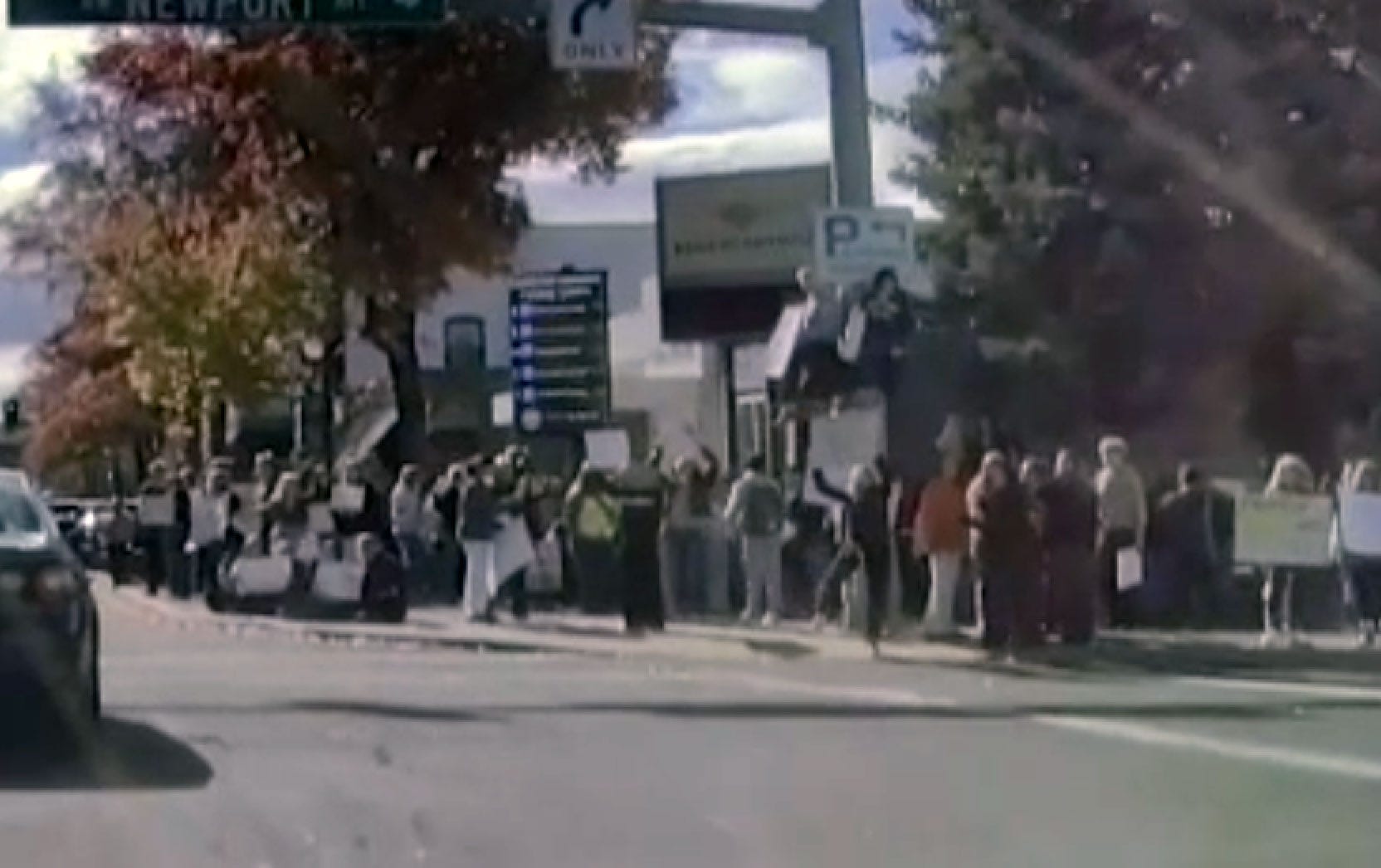
The political divide in Oregon is real — the deep blue government is hated by the deep red majority of the state, and when you live in the red part, and you see why, you can understand it more easily. The government doesn’t want anyone shooting wolves because that offends city dwellers, but the ranchers who feed the nation can’t make a living without shooting wolves. The Portland folks don’t want a logging industry, but so much of the country depends on Oregon timber and so much of the state needs the industry to put food on the table. And so on. The disconnect is fundamental.
County governments carry most of the social service burden in Oregon (behavioral health, public health, etc.), and the difference is shocking. Annual spending on homelessness in Multnomah County (where Portland is) is $390 per resident; in Deschutes County (where Bend is) it’s under $55 — less than a seventh. Why shouldn’t the rural residents resent their city-dwelling overlords?
That picture gives a bit of context to the environment of Silver Rail Elementary where the shooting happened, and to the 16-year-old shooter.
Our first mass shooting was at a Safeway supermarket in 2022. That shooter was 20 and had attended a Bend high school, and killed himself after killing two and wounding two others in the market. His journal was filled with violent imagery. He owned an arsenal of weapons, both legal and illegal. Fellow students regarded him as the one “most likely to be a school shooter.” In short, this surprised no one.
This week’s shooter was 16 and had been to all of the alternative schools for high-risk adolescents. I’ve already given you some of the reasons why this shooting also surprised nobody. With the information we know about him, we can point to one deficiency in the system that might have prevented this episode: There is no money here in central Oregon for these alternative schools to keep students there. Attendance is nominally required but is not enforced, even for kids widely believed to be the next school shooter. You can even “attend online” if you want, which nobody does, so there is literally zero oversight, and zero services provided.
Generational trauma played a big role. The shooter’s dad was an abusive homeless rando who came & went; it’s reported that his mom had a background of abuse, no help, no services, but plenty of drugs and alcohol and tobacco. We shouldn’t be surprised that she gave him a shotgun. That’s how you solve problems when you don’t know anything else.
If this had been Portland, or another major city where there is money, alternative schools have the resources they need, and can send the highest risk kids to lockdown facilities if needed. Teachers in central Oregon have no such option (Oregon lacks anything comparable to California’s 5150 law) — and the reputation for the state’s Oregon Child Abuse Hotline among therapists is that nobody answers the phone or returns messages.
Lot of people close to this spoke to the FBI and to the police about the shooter’s background, and to the services he did and did not receive. The hope was that the more such information they gave, the more of a chance it might move the needle and get Portland-level support to rural communities that aren’t Portland. But the other piece of insider information I got was that nobody thinks that will happen.
Not prioritizing services for those who need them most harms all of us.
I live in a medically-underserved rural area, and it seems pointing to a lack of rural support systems can get labeled as "grievance" and (therefore?) dismissed. Those deep red areas have lots of square miles but fewer people than the cities. I assume services can be more easily afforded in areas of dense population, and expanding beyond urban or suburban areas costs more and more per person, but isn't America a land of innovation?
What a frightening story. I also live in a rural area and understand all to well how f
unding is lacking in non urban areas. People think California is San Francisco or Los Angeles. But there is deep red in the central valley and we need services that are available elsewhere.
Sorry I missed you in Sacramento a couple of weeks ago at California Free Thought Day.